If there is one question that hangs in the minds of many parents, it is: at what age does a baby start saying "mama" and "dada"? This long-awaited milestone is a source of anxiety and anticipation for many families, and that is exactly what we are going to talk about today.
In our article, you will discover the stages of speech development in babies, understand when it is considered the ideal time to start worrying about a lack of speech, and, above all, how to stimulate and encourage your baby to take their first steps in verbal language.
Here, the tone is friendly and welcoming, as if we were exchanging tips with a close friend. Let's demystify myths, share real experiences, and guide you through this enchanting universe of child communication.
So, if you are curious to learn more about this important process in your baby's life, stay with us. Let's explore the world of first words together and further strengthen the bond between you, mom or dad, and your little treasure.
Baby Language Development in the First Few Months
Language is one of the most enchanting achievements in a baby's development. In the first months of life, even if there are no formed words, babies are constantly absorbing and processing sound information around them. Let's explore how this incredible process of language development occurs in little ones.
1. Initial Sounds and Reactions
At first, babies make sounds instinctively, such as crying, babbling, and cooing. These sounds are their first attempts to communicate with the world. It is important for parents and caregivers to pay attention and respond to these sounds, creating an environment of interaction and stimulation.
2. Voice Recognition
- Babies begin to recognize familiar voices, such as those of their mother and father, in the first few months. They respond differently to different voices, indicating keen auditory sensitivity from an early age.
- Talking to your baby, singing, reading aloud, and playing sound games are practices that contribute to language development and strengthen the emotional bond between parents and children.
3. Facial Movements and Expressions
In addition to sounds, babies also closely observe the facial expressions of those around them. They imitate smiles, grimaces, and lip movements, which is an important exercise for the development of speech and nonverbal communication.
In the next section, we will discuss how repeating sounds and words influences a baby's language development, preparing them for their first babbling and words.
First Vocalizations and Babbling
When it comes to a baby's language development, their first vocalizations and babbling are exciting and meaningful moments. It is at this stage that parents begin to notice the first signs that their little one is preparing to speak actual words.
These initial vocalizations may begin to appear around 3 to 4 months of age, varying from baby to baby. It is important to be attentive to these signs and encourage communication from an early age.
How to Identify the First Vocalizations
- Attention to Sounds: Babies begin to produce more elaborate sounds, moving from crying and whimpering to babbling and different vocalizations.
- Interest in Communication: They show interest in interacting and communicating using their own forms of sound expression.
- Imitating Sounds: Babies may try to imitate the sounds they hear around them, such as clapping, snapping, or even simple syllables.
These are just some of the signs that indicate that your baby is beginning to explore language and prepare for the next steps toward their first words.
Encouraging Your Baby to Vocalize
It is essential that parents and caregivers are present and actively encourage language development from an early age. Some simple tips can help in this process:
- Talk to your baby: Even if they don't understand every word, vocal contact is essential for language development.
- Sing and Make Sounds: Fun songs and sounds stimulate your baby's hearing and vocalization.
- Respond to Vocalizations: When your baby makes a sound, respond positively, encouraging communication.
Remember, every baby develops at their own pace, so it is important to respect each child's timing and individuality. With patience, encouragement, and affection, those first words will soon become part of your family's daily life.
Simple Word Recognition
When we talk about speech development in babies, recognizing simple words plays a key role. From a certain age, little ones begin to associate sounds with meanings, which is an important milestone in the communication process.
It is interesting to note that babies usually begin to recognize simple words around 6 to 8 months of age. During this period, the child's brain is in full development, absorbing information and making important connections.
The importance of repetition and clarity in speech
To help your baby recognize simple words, it is essential to repeat them often and clearly. When talking to your baby, make sure you are in a quiet environment where they can pay attention to the sounds and words you are saying.
- Use keywords such as "mom" and "dad" consistently in everyday life.
- Point to objects and say their names so that your baby begins to associate sounds with images.
- Be patient and affectionate when interacting with your baby, creating a safe and stimulating environment for speech development.
Encouraging communication
In addition to repeating simple words, it is important to encourage communication in other ways, such as:
- Sing children's songs and play games that involve rhymes and sound repetitions.
- Read to your baby regularly, showing them books with colorful pictures and simple words.
- Respond to your baby's attempts to communicate, even if they are just babbling or gestures, valuing their expression.
Remember that every baby develops at their own pace, so it is essential to respect their individuality. With patience, love, and appropriate encouragement, recognition of simple words will become increasingly evident, marking the beginning of an incredible journey toward full communication.
The Importance of Parental Interaction in Language Acquisition
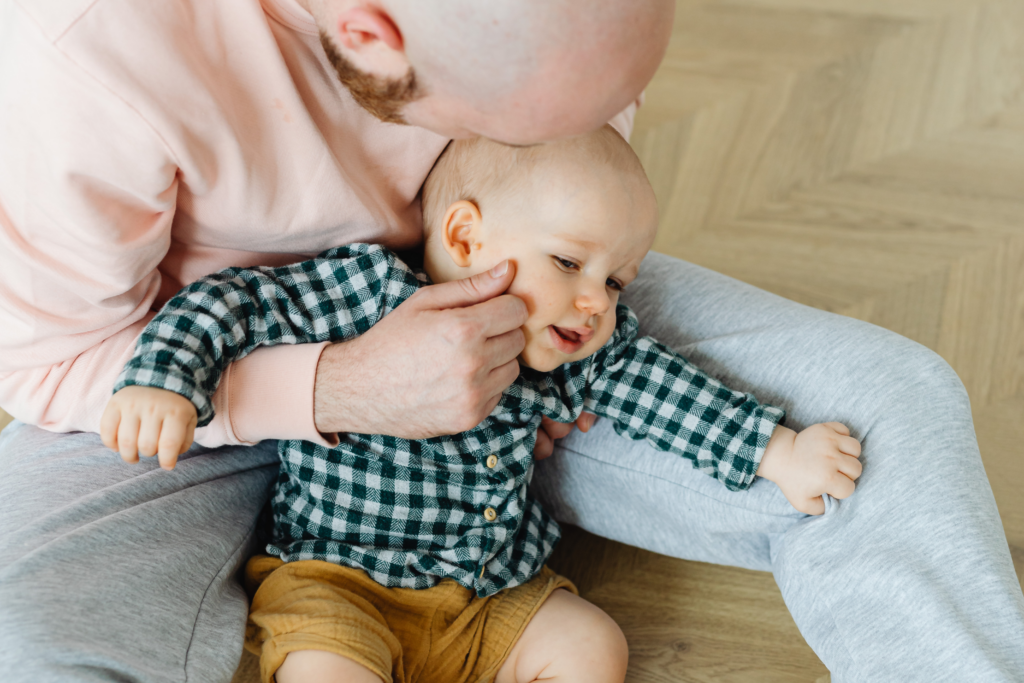
When we talk about language development in babies, it is crucial to emphasize the direct influence that parental interaction has on this process. From the first months of life, constant and affectionate communication from parents plays a fundamental role in language acquisition by young children.
Verbal and Emotional Stimuli
Babies absorb everything around them, and their parents' words and emotions are like a treasure trove for their linguistic and emotional development. Talking, singing, reading stories, and playing interactively with your baby are effective ways to stimulate their communication skills. In addition, eye contact and the affectionate tone of voice of parents are essential elements in strengthening emotional bonds and facilitating language comprehension.
Linguistic Model
Parents are babies' first linguistic role models, and it is through observation and imitation that little ones begin to develop their speaking and comprehension skills. It is common for babies to reproduce the sounds and intonations they hear at home, and this imitation is a crucial step in the language learning process.
Consistency and Patience
Consistency in parents' interaction with their baby is essential for the child to feel secure and confident in their communication. Repeating words, encouraging speech attempts, and responding positively to the baby's attempts at communication are practices that contribute significantly to language development.
Active Involvement
It is important for parents to be present and actively involved in the language acquisition process, stimulating their baby's curiosity and creativity. Games that involve language, such as naming objects, describing actions, and narrating everyday experiences, are excellent opportunities to enrich the child's vocabulary and understanding.
Parental involvement in language acquisition is a precious treasure that contributes not only to linguistic development, but also to strengthening family bonds and building a solid foundation for the baby's healthy growth.
Encouraging Speech at Home
Now that you know a little more about speech development in babies, let's talk about how you can stimulate this important skill at home. Remember, every baby has their own pace, so it's essential to be attentive and provide an environment conducive to language development.
Create a Favorable Environment
To help your little one explore and develop speech, it is essential to create an environment rich in stimuli. Here are some tips:
- Talk to your baby: From the first few months, talk to your baby. Even if they can't talk yet, hearing your voice is essential for language development.
- Read stories: Reading to your baby stimulates their hearing and creativity and familiarizes them with language. Even if they don't understand the words yet, the intonation of your voice is very important.
- Sing songs: Children's songs are great for stimulating speech and memory. Singing to your baby also strengthens the bond between you.
Play and Interact
In addition to verbal communication, games and interactions are also essential for speech development. Here are some activity tips:
- Playing with sounds: Toys that make sounds, such as rattles and musical instruments, are great for stimulating your baby's curiosity and auditory experimentation.
- Imitate your baby's sounds: When your baby makes sounds, imitate them and respond. This shows that you are paying attention and encourages communication.
- Name objects: While playing, name objects and actions. This helps your baby associate words with everyday objects and situations.
Remember, patience and affection are essential in this process. Every baby develops speech at their own pace, and it is important to respect each child's rhythm. Continue to stimulate and interact with your little one, as language is one of the most important skills for their communication and development.
Individual Differences in Speech Development
Now that we understand that every baby has their own timeline for starting to talk, let's explore a little more about individual differences in speech development.
Influences on Speech Development
1. Genetic Factors: Just as some physical characteristics are inherited from parents, speech development can also be influenced by genetics. Some children may have a natural predisposition to start speaking earlier.
2. Stimulation and Environment: The environment in which a child grows up plays a key role in speech development. Babies exposed to a richer vocabulary and frequent verbal interactions tend to develop speech more quickly.
Variations in the Pace of Development
1. Early Talkers: Some babies surprise their parents by starting to babble and say simple words earlier than expected. These little communicators tend to have accelerated speech development.
2. Shy Babies: On the other hand, some babies may take a little longer to start talking. This does not necessarily mean a delay in development, just a natural variation in the pace of learning.
The Importance of Careful Observation
It is essential that parents pay attention to their children's speech development, respecting each child's individual pace. Observing attempts at communication, encouraging verbal interaction, and seeking professional guidance if there are concerns are actions that can benefit a child's language development.
In this process, remember that every baby is unique, and individual differences in speech development are a natural part of every child's growth. With patience, appropriate encouragement, and love, your little one will be well on their way to becoming a skilled communicator.
Warning Signs for Possible Language Delays
When it comes to your baby's language development, it is important to be aware of certain signs that may indicate possible delays. Although every child develops at their own pace, it is essential to recognize when further evaluation may be necessary.
1. Absence of babbling until 12 months of age
One of the first warning signs is the absence of babbling around 12 months of age. Babbling is the repetitive, simple sounds that babies make, such as "bababa" or "dadada." If your child is not yet babbling at this stage, it may be an indication of language delay.
2. Limited variety of sounds and words
Observing the variety of sounds and words your baby produces is also essential. If they limit themselves to just a few sounds or words, especially after 18 months, this could be a warning sign. Vocabulary diversity is an important milestone in language development.
3. Difficulty imitating gestures and sounds
Another indication of possible language delays is the baby's difficulty in imitating simple gestures and sounds. Imitation is a natural way of learning for young children, and they are expected to try to reproduce what they see and hear around them. If this is not happening, it is important to be aware.
4. Lack of nonverbal communication
Nonverbal communication, such as pointing, waving, or making eye contact, is a crucial part of language development. If your baby does not demonstrate these behaviors or has difficulty communicating nonverbally, it may be a warning sign that warrants attention.
Always remember that every child is unique and may follow their own developmental schedule. However, it is essential to be aware of these signs and, if in doubt, seek guidance from specialized professionals to ensure the best care for your child.
Consultation with a Child Development Specialist
If you notice that your baby is taking longer than expected to say their first words, it may be a good idea to schedule an appointment with a child development specialist. These professionals have the knowledge and experience necessary to assess your child's language development and offer personalized guidance.
Why schedule an appointment?
Consultations with child development specialists can provide valuable insights into your baby's speech progress. In addition, these professionals can identify potential language development problems or delays early on, allowing for appropriate and timely interventions.
What to expect from the consultation?
During the consultation, the child development specialist will conduct a detailed assessment of your child's language skills. This may include observing how the baby responds to sound stimuli, their ability to imitate sounds and words, and their understanding of verbal language.
- Comprehensive assessment: The specialist will evaluate various aspects of language, such as vocabulary, pronunciation, and comprehension.
- Personalized guidance: Based on the assessment, the professional can offer specific guidance to stimulate your baby's language development at home.
- Referrals: If necessary, the specialist may refer your child to other professionals, such as speech therapists, for more specialized care.
Benefits of early consultation
Making an appointment with a child development specialist as early as possible can bring countless benefits to your baby's development. Early intervention in cases of language delays can make all the difference in your child's future, ensuring that they reach their full potential.
Remember, every child develops at their own pace, but being aware of possible signs of language delay and seeking specialized help when necessary is essential to ensure the best for your little one.
Conclusion
After exploring the development of language in babies during the first months of life, it became clear that the process of learning to speak is fascinating and fundamental to communication and family bonding. From the first vocalizations and babbling to the recognition of simple words, parents play a crucial role in this journey.
Parental interaction in language acquisition is essential to encourage babies to communicate and express themselves. Creating a welcoming environment conducive to speech development at home can make all the difference in this process.
As a final thought, remember that every baby is unique and develops at their own pace. So be patient and be there to support and encourage your child at every stage.
Now that you are more familiar with the topic, how about sharing your experiences or questions in the comments below? Or, apply the knowledge you have acquired and start stimulating your baby's speech in an even more conscious and loving way. Together, we can promote healthy and harmonious development for our little ones.