You know that feeling when time seems to stand still, but your belly feels like it’s about to burst from all that quiet preparation? Well, our bodies are surprisingly smart and start giving us signs long before the first real contraction even shows up.
If you’ve noticed it’s easier to breathe because the baby has “dropped,” experienced a natural bowel movement, or felt that overwhelming urge to clean the entire house, labor is just around the corner. Your body is paving the way with subtle signs that indicate the time is approaching:
- Increased pressure in the pelvis and pubic region;
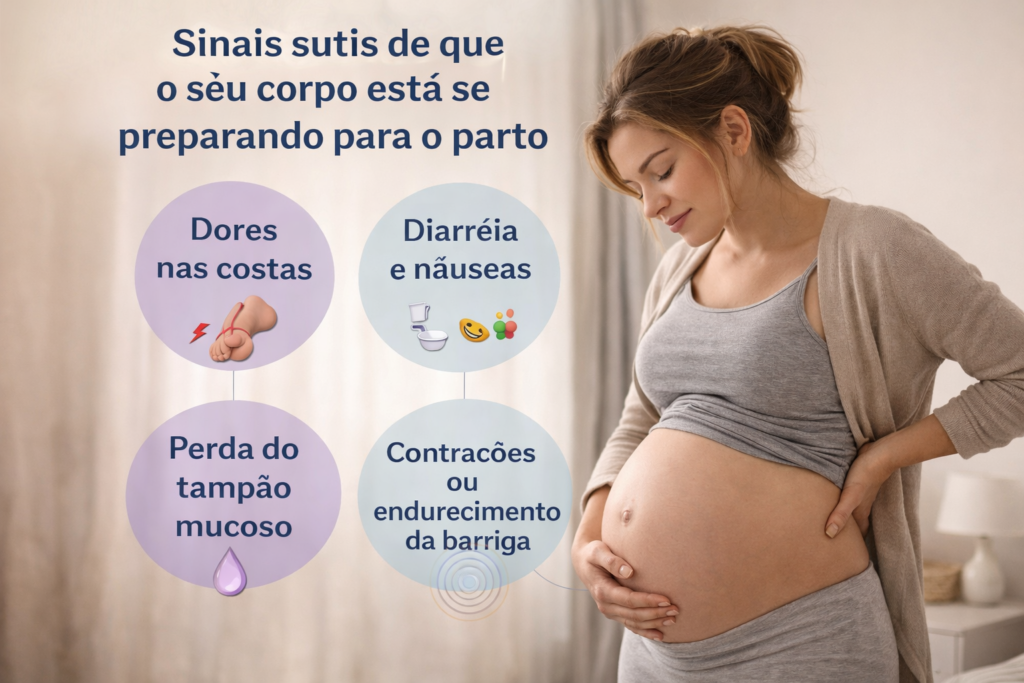
- Discharge of the mucous plug (a gelatinous secretion);
- Mild, persistent cramps—the so-called prodromal symptoms;
- "Nesting" instinct and sudden restlessness.
Don't worry—nature knows what it's doing, and we'll help you understand every detail of this wait without any surprises.
Quick Guide: 7 Subtle Signs That Your Body Is Preparing for Labor
A woman's body is wise and starts "getting ready" well before the first strong contractions begin. If you feel like your belly has dropped or that you can suddenly breathe more easily, your body is letting you know that the big day is approaching.
These signs are subtle, but they indicate that the baby is already dropping into the pelvis and that hormones are working full steam ahead to facilitate the birth. Paying attention to these small changes brings a sense of calm and helps you prepare emotionally for the most anticipated moment of your life.
Relief in breathing and pressure down there
When the baby "drops," it frees up space in your diaphragm. You'll feel like you can breathe more easily, as if a weight has been lifted from your ribs.
On the other hand, the pressure is now concentrated on the bladder. The urge to urinate increases, and you may feel a heaviness in the pelvic area, as if there were constant pressure on your hip bones.
The "nesting" instinct
You know that sudden urge to clean the house, organize the closet, or check the hospital bag for the tenth time? That’s your nesting instinct kicking in.
Your body releases a surge of adrenaline and energy to ensure that the environment is safe and ready for the newborn. If you feel the urge, go for it, but don’t overexert yourself.
Changes in the intestinal tract
Many women notice that their bowel movements become looser in the days leading up to childbirth. This happens because prostaglandin begins to relax all the muscles, including those of the digestive system.
- Slight weight loss: It is common to hit a plateau or lose about 1 kg due to fluid loss.
- Increased vaginal discharge: The mucus becomes thicker and more abundant to protect the birth canal.
- Restless sleep: The body enters a state of alertness, as if preparing for nighttime feedings.
Tip: If you notice a gelatinous discharge (with pink or brown tints), that’s the mucus plug. It doesn’t mean the baby will be born today, but it’s a sign that your cervix is starting to dilate.
| Subtle Sign | What happens in the body? | What do you feel? |
|---|---|---|
| Baby drops | The baby’s head descends into the pelvic cavity. | Your belly is noticeably lower, and your breathing improves. |
| Increased pressure | The baby’s weight presses on the bladder and rectum. | Frequent urge to urinate and pelvic twinges. |
| Nesting instinct | Pre-birth hormonal energy surge. | Uncontrollable urge to organize and clean the house. |
| Placenta Delivery | The cervix begins to thin and open. | Discharge of thick mucus, sometimes with light bleeding. |
| Intestinal Instability | Muscle relaxation caused by prostaglandins. | Mild abdominal cramps or looser stools. |
| Loose Joints | Action of relaxin to expand the pelvis. | A sensation of "loose hips" or lower back pain. |
| Practice Contractions | The uterus is practicing for the real thing. | The belly hardens without rhythmic pain (Braxton Hicks). |
How to Deal with Last-Minute Anxiety
At this stage, the key is to take it slow. Your body is conserving energy for the effort of childbirth, so pay attention to signs of fatigue and avoid stressful commitments.
- Do some light exercises on a Pilates ball to relieve pelvic pressure.
- Stay well-hydrated, even if you feel the urge to use the restroom.
- Trust the process and understand that every little sign brings you one step closer to your destination.
Gradual physiological changes that occur before birth
A woman’s body is a wise machine that doesn’t like improvisation. Before the first rhythmic contraction begins, it starts an internal cleanup and fine-tuning process that can last for days or weeks. These gradual physiological changes pave the way, ensuring that the baby finds the birth canal ready and that the uterus knows exactly what to do.
The silent dance of hormones
Relaxin kicks in with full force, acting as a natural softener for your ligaments. It loosens the joints in your pelvis, allowing the bones to open up to make way for the baby. This process causes that famous sensation of “loose hips” or sharp pains in the pubic symphysis.
Meanwhile, progesterone levels drop slightly, allowing the uterus to become more sensitive to oxytocin. It is this hormonal shift that signals to the muscle fibers that the time to work hard is approaching, transforming the uterine environment.
The fit and respiratory relief
You'll notice that your belly "shifts position." The baby drops down and settles into the pelvis, a phenomenon known as engagement. The good news is that your diaphragm has more room, and that annoying shortness of breath finally gives you a break.
On the other hand, pressure on the bladder increases significantly. The weight of the baby’s head pressing against the pelvic floor stimulates the nervous system, triggering physiological changes that prepare the cervix to begin thinning and dilating.
Signs that the gears have shifted
Your body begins to show clear physical signs that the big day is approaching. Keep an eye out for these signs of maturity:
- Softening and thinning of the cervix (it becomes as thin as paper).
- Increased vaginal discharge, which prepares the birth canal.
- Expulsion of the mucus plug, a gel-like substance that protected the opening of the uterus.
- Sudden bursts of energy, the famous "nesting" instinct to tidy up the house.
Tip: If you start to feel lower back pain that doesn’t go away with rest, your body is moving the cervix into an anterior position. Drink some water and rest; your body knows the right timing for everything.
Braxton Hicks contractions also change in pattern. They stop feeling like just a silly tightening and start to feel like a certain pressure, as if the uterus were testing the engines’ power before the official takeoff.
The baby's descent and increased pelvic pressure
You know that moment when you feel like you can finally take a deep breath again, but at the same time, it feels like you have a watermelon hanging between your legs? That’s the baby dropping, also known as engagement.
The baby is settling into the pelvis, relieving pressure on the diaphragm and shifting all that weight to the pelvic region. It’s a classic sign that the body is getting ready for the big day.
How to recognize changes in your body
You’ll notice that the shape of your belly has changed. It’s visibly lower and tilted forward, leaving an empty space just below your breasts. This shift paves the way for childbirth, but it also brings new discomforts.
The pressure is now concentrated on your pelvic bones and, especially, on your bladder. It’s common to feel like you need to go to the bathroom every ten minutes, since space down there has become quite cramped.
- A sensation of sharp pains or tingling in the genital area.
- A shift in your center of gravity, which may change the way you walk.
- Immediate relief from heartburn and constant shortness of breath.
- Increased pressure in the rectum, giving the sensation that the baby might "come out" at any moment.
Tip: To relieve excess weight and pressure, try making circular movements while sitting on a Pilates ball. This helps relax your muscles and allows the baby to settle into a more comfortable position for you.
The time until the meeting
Although the baby dropping is a strong sign that you’re getting ready to give birth, it doesn’t mean you’ll go into labor within the next hour. For first-time mothers, this can happen weeks before the birth.
For those who have already had children, the baby usually drops only once labor actually begins. The important thing is to pay attention to how your body reacts and to allow time for this transition and engagement.
The nesting instinct and the psychological preparation of the expectant mother
You know that sudden urge to clean the grout in the bathroom or organize your drawers by color at three in the morning? Well, your nesting instinct has kicked in. This is one of the clearest signs that your body and mind are entering the home stretch.
It’s not just a “desire to tidy up the house.” It’s a deep biological response, inherited from our ancestors, designed to ensure that the baby arrives in a safe environment. This extra energy helps calm anxiety and prepares us mentally for the big transition.
The Wolf's Awakening: The Biology Behind the Cleanup
The rise in oxytocin and adrenaline toward the end of pregnancy triggers a protective instinct. You want everything to be flawless—not out of perfectionism, but out of a pure instinct for survival and a desire to welcome the new family member.
Your mind understands that the chaos around you needs to be brought under control so that you can focus entirely on the newborn. This is the moment when it finally sinks in: your life is about to change radically in a matter of days or hours, and you’re taking control of your space.
Common signs that the mind is preparing itself
- An obsessive focus on the details of the hospital bag and the nursery.
- An uncontrollable urge to stockpile essentials, such as diapers and groceries.
- The need for social distancing to focus solely on the immediate family.
- Increased creativity in resolving long-standing household issues.
Tip: Take advantage of this burst of energy, but don’t overexert yourself. The goal is peace of mind, not physical exhaustion. If you feel tired, stop. Your baby needs you to be well-rested and in good health.
How to navigate this phase without feeling overwhelmed
Accept that not everything will be 100% perfect, and that’s okay. Use this mindset to take conscious breaks and talk to your baby. This external organization helps you organize your internal emotions, setting the stage for childbirth.
Delegate the heaviest tasks to those around you. Ask for help moving furniture or climbing stairs. Your role now is to keep things running smoothly, staying calm and saving your energy for the upcoming labor.
Gastrointestinal symptoms and the body's hormonal response
You know that feeling when your stomach feels like it’s in knots or you find yourself running to the bathroom more often? Well, the body is surprisingly clever. As labor approaches, a surge of prostaglandins floods the body. These hormones have a clear mission: to soften the cervix and, as a bonus, stimulate bowel movements. It’s nature’s way of clearing the path so the baby can pass through without obstacles. If your bowels have decided to “work” more than usual for no apparent reason, you can pack your bag: labor is showing its first signs.
The interplay of hormones in the digestive tract
Prostaglandins aren’t the only factors at play in this final stretch. The sudden drop in progesterone levels—which previously slowed digestion to allow for nutrient absorption—speeds up intestinal transit. The body realizes it needs space in the pelvis. That’s why episodes of looser stools or mild diarrhea are common in the days before regular contractions begin in earnest.
What you actually experience
The signal isn't always obvious, but it's usually persistent and very distinctive. Pay attention to these warning signs your body sends:
- A sudden increase in the frequency of daily bowel movements.
- A sensation of cramping in the lower abdomen, very similar to menstrual cramps.
- Mild nausea or a sudden loss of appetite.
- A feeling of "internal cleansing" or relief from stomach pressure.
Tip: Focus on staying hydrated. If you have loose stools, drink plenty of water and coconut water. The uterus is a muscle and needs plenty of water to work properly during contractions.
Distinguishing the symptoms from a common ailment
Unlike food poisoning, this hormonal response is rarely accompanied by fever or chills. It is a physiological process of physical preparation. The body is simply “cleaning house” so that the uterine muscles have complete freedom of movement. Note whether this pattern occurs alongside the mucus plug or an increase in pelvic pressure.
Calming the mind and the stomach
If you experience gastrointestinal symptoms, avoid heavy or very fatty foods. Opt for light, easily digestible foods, such as fruits and broths. Your body is conserving energy for the Herculean effort of childbirth. Respect this rhythm and understand that every trip to the bathroom brings you one step closer to your baby.
The role of the mucous plug during labor
Losing the mucus plug can be scary for many people, but it’s just your body letting you know that things are moving along. It acts as a protective plug that seals the cervix throughout pregnancy, preventing bacteria and infections from getting near the baby.
When the cervix begins to thin and dilate, this substance is released. Does that mean labor is starting today? Not necessarily. It can take hours, days, or even weeks, but it’s a clear sign that the “preparations” for birth are in full swing.
How to identify the appearance of the plug
Many people mistake it for normal discharge, but the discharge is thicker and gel-like. It can be clear, whitish, or have shades of pink and brown.
This discoloration occurs because small blood vessels in the cervix rupture as it prepares to open up. Here are the main characteristics:
- Consistency: Similar to very firm egg whites or gelatin.
- Form of discharge: It may come out all at once or in small amounts over several days.
- Color: Ranges from crystal clear to an antique "blood-stained" hue (the color of coffee grounds).
What to do after removing the tampon
There’s no need to rush to the hospital just because of this. If you aren’t having regular contractions or your water hasn’t broken, the key is to stay calm. Your body is simply signaling that the pre-labor phase has begun.
Take this time to check your hospital bag and make sure you’re well-rested. The plug is your body’s way of saying, “I’m getting ready—stay alert.”
Tip: If the loss of the mucus plug is accompanied by heavy, bright red bleeding—similar to a menstrual period—contact your doctor immediately. Otherwise, simply monitor the situation and let your baby take its own time.
The difference between a swab and amniotic fluid
It’s common to get things mixed up in the final stretch. While the mucus plug is thick and “sticky,” amniotic fluid is as runny as water and usually doesn’t have a strong odor.
If you feel like your underwear is constantly getting wet with a liquid discharge, your water may have broken. A mucus plug, on the other hand, is a solid mass that doesn’t run like water.
The difference between Braxton Hicks contractions and actual labor
You know that sudden tightening in your belly that makes you stop everything and hold your breath for a second? If you’re in the final stretch, Braxton Hicks contractions are a frequent occurrence. They’re the uterus’s “dress rehearsal,” but they don’t mean the baby is going to be born right away.
Real labor, on the other hand, is a rhythmic, persistent process that doesn’t stop when you change positions. While practice only prepares the muscles, actual labor works to dilate the cervix and bring your child into the world.
How to recognize Braxton Hicks contractions
These contractions are like a sudden jolt that quickly passes. They’re usually irregular and tend to be stronger toward the end of the day or after you’ve exerted yourself physically. The key to recognizing them is to see if they subside when you rest.
- Feeling your entire abdomen tighten, but without any sharp pain.
- The contractions don't occur at regular intervals and disappear out of nowhere.
- Drinking water or changing positions (lying down or walking) makes the discomfort go away.
- The discomfort is usually limited to the front of the abdomen.
Signs of active labor
Here, it’s a different story, and your body lets you know that the time has come. Real contractions pick up in pace and intensity. They don’t let up, and as time goes on, the intervals between them grow shorter and more predictable.
- The contractions start in the back and radiate to the front of the abdomen.
- The interval between them gradually decreases (e.g., from every 10 minutes to every 5 minutes).
- The pain doesn't go away if you rest; on the contrary, it gets worse.
- They may be accompanied by other symptoms, such as a ruptured amniotic sac or bloody discharge.
Tip: When in doubt, try the "warm shower" rule. Step into the shower and relax. If the contractions are just practice contractions, the warm water will soothe your uterus. If they're the real thing, they'll stay strong and steady.
When it's time to go to the maternity ward
There’s no need to rush off at the first sign of discomfort. The best approach is to keep track of the time. If you experience regular contractions that last about 60 seconds and occur every 5 minutes for at least an hour, it’s time to notify your medical team.
Also be on the lookout for warning signs that require immediate evaluation, regardless of whether you’re having contractions. Heavy bleeding, a lack of fetal movement, or a large gush of fluid are all reasons to go to the emergency room without delay.
How to identify progressive dilation through physical signs
Understanding how the body prepares for the baby’s arrival is a process that combines intuition and careful observation. Progressive dilation rarely happens suddenly; it sends clear signals through pelvic pressure, changes in the texture of the cervix, and even in the way you breathe. The clearest sign is the baby dropping, which frees up space in the diaphragm and increases the weight down below. If you feel like your belly has “dropped” and walking has become heavier, your cervix has already begun the process of thinning and opening.
The Tampon Sign and Vaginal Texture
The discharge of the mucus plug—that gelatinous secretion, sometimes streaked with blood—is the first major physical sign. It indicates that the cervix is no longer as firm as the tip of the nose but is becoming as soft as the lips.
This change in consistency is what allows dilation to proceed safely. Many women notice a sudden increase in vaginal moisture and a feeling of "vulnerability" in the pelvic area, as if their body were loosening up.
The Purple Line in the Gluteal Cleft
There is a fascinating visual sign known as the purple line. It is a reddish or purplish mark that appears in the crease between the buttocks and extends upward as the cervix dilates.
The higher the line rises toward the tailbone, the more dilated the cervix tends to be. Experienced midwives use this sign to monitor progress without needing to constantly check, respecting the woman’s own pace.
Rectal Pressure and Body Behavior
As the baby descends and dilation progresses to the final centimeters, the pressure shifts. You no longer feel just cramps; instead, you feel an intense pressure in your rectum, much like the urge to have a bowel movement.
- Change in breathing: Air enters more easily because the baby is no longer pressing against the ribs.
- Nesting instinct: A sudden urge to tidy everything up, followed by a deep dive into "parenting land."
- Chills and tremors: The body shakes to release oxytocin and help the contractions progress.
- Voice projection: The tone of your voice becomes deeper, which helps relax the pelvic floor muscles.
"Dilation is a dance between hormones and muscles. If you feel intense pressure at the base of your spine and an involuntary urge to push, your body is signaling that the active phase has reached its peak."
The Ladder of Contractions
Practice contractions create a rhythm that doesn't stop when you change positions. As dilation progresses, the contractions become longer, lasting about 60 seconds, and the time between them shortens.
See if you can talk during a contraction. When speaking becomes difficult and you need to focus entirely on your body, that means dilation is picking up speed and your cervix is really working hard.
Safety guidelines on when to call for medical assistance
Knowing exactly when to call your doctor or head to the hospital brings immediate relief amid the anxiety. The definitive sign is when contractions become regular, the mucus plug comes out with blood, or your water breaks. If you feel pain that doesn’t subside with rest and follows a pattern of increasingly shorter intervals, it’s time to call your support network and head to the hospital.
The golden rule of contractions
There’s no need to rush off at the first “pinch.” True labor is persistent. See if the contractions last about 60 seconds and occur every 5 minutes, maintaining this frequency for at least an hour.
- Time it: Use an app or a watch to measure the time from the start of one to the start of the next.
- Assess the intensity: During true labor, you usually can't walk or talk during a contraction.
- Take a break: If you lie down and the pain goes away, it’s probably just your body adjusting.
Warning signs requiring immediate action
There are situations that bypass the waiting period and require you to contact your obstetrician immediately. Your baby’s safety depends on acting quickly. Be on the lookout for any fluid leaking down your legs, even if you’re not in pain, as this indicates that your water has broken.
- Active bleeding: Any amount of bright red blood requires immediate evaluation.
- Fetal movement: If you notice that the baby has stopped moving or is kicking much less frequently, let the staff know.
- Sudden pain: Constant, severe abdominal pain—different from contractions—is a warning sign.
- Signs of preeclampsia: Blurred vision, persistent headache, or sudden swelling in the hands and face.
Tip: If your water breaks, check the color of the fluid. Ideally, it should be clear as water or slightly whitish. If it’s greenish or dark, go straight to the hospital without waiting for contractions.
Set up your emergency contact
Keep the doctor’s, hospital’s, and your companion’s phone numbers posted in a visible place or saved in your phone’s contacts. When it’s time to call the medical team, stay calm and clear-headed, and describe exactly what you’re feeling and how often the symptoms occur.
Trust your intuition. If something feels "off" or if you feel particularly anxious, call your doctor. It’s better to get checked out just to be safe than to ignore an important signal from your body during this final stretch.
Frequently Asked Questions (FAQs)
How long before birth do the subtle signs usually appear?
The subtle signs that the body is preparing for childbirth may appear weeks or just a few days before active labor begins. Every body reacts differently: while some pregnant women feel the baby drop (engaging) two to four weeks beforehand, others may notice changes in their bowel movements or a "nesting" instinct just 48 hours before regular contractions begin.
Is it normal to experience mild cramps and pressure in the pelvis at this stage?
Yes, it’s one of the most common signs. As the baby moves into position for birth, pressure on the bladder and pelvic bones increases significantly. These mild cramps, similar to menstrual cramps, indicate that the uterus is becoming more sensitive and that the cervix may be beginning the process of softening and early dilation.
Does the loss of the mucus plug mean that I'll give birth today?
Not necessarily. The discharge of the mucus plug—that gelatinous secretion that may be pink or brown in color—is a clear sign that the cervix is changing, but actual labor may still be a few days to a week away. It’s a sign of preparation, but it shouldn’t be interpreted as an immediate emergency unless it’s accompanied by amniotic fluid leakage or intense contractions.
Is it true that changes in bowel habits indicate that labor is approaching?
Yes, many women experience looser stools or even diarrhea in the days leading up to delivery. This happens because the body releases prostaglandins, substances that help the cervix ripen but can also stimulate the intestines. It’s a natural way for the body to “clear out” the system to make more room for the baby during birth.
Does the baby stop moving when the body prepares for labor?
The baby never stops moving, but the pattern of movement changes. Since the baby is now lower down and there is less space, you may feel fewer sharp kicks and more "rolling" or pressing movements. However, it is essential to continue monitoring fetal movement; if you notice a complete absence of movement, you should seek medical attention immediately for an evaluation.
Conclusion
Recognizing the subtle signs that your body is preparing for labor is a powerful tool for reducing anxiety and strengthening your bond with your baby. Although every pregnant woman’s journey is unique, noticing changes such as your belly dropping, increased pelvic pressure, and shifts in energy levels allows you to prepare yourself emotionally for the big day. These small signs are nature’s way of letting you know that the final stretch is near and that your body knows exactly what to do to welcome this new life.
So, when you notice these symptoms, stay calm and take the opportunity to rest and tie up any loose ends. Labor is a gradual process, and these early signs serve as an essential transition period. Always remember to keep your doctor or obstetrician informed about these subtle changes, ensuring a safe and peaceful final stretch of pregnancy, fully aware of all the incredible changes taking place in your body.

Clara is a mom, a word lover, and the founder of Love & Care a space for women seeking guidance on baby names, motherhood, gifts, and everything in between. She believes the right words have the power to transform.